
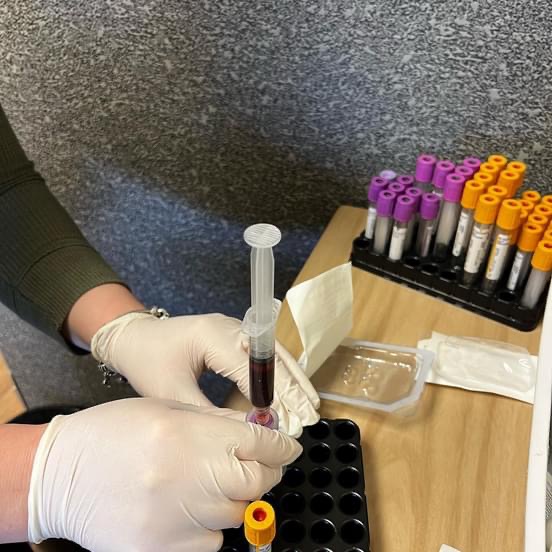
Choosing a career as a Medical Lab Assistant is an exciting step toward working in healthcare. While classroom training teaches you the theory behind laboratory procedures, your practicum is where everything comes together.
For many students, the practicum is one of the most rewarding parts of the program. It gives you the opportunity to apply your skills in a real healthcare setting, work with patients, and experience what your future career looks like day to day.
What Is a Medical Lab Assistant Practicum?
A practicum is a supervised clinical placement that allows students to gain hands-on experience in a healthcare environment. It is an important part of Medical Lab Assistant training because it helps bridge the gap between classroom learning and real-world practice.
During your coursework, you’ll learn about specimen collection, laboratory procedures, infection control, and patient care. During your practicum, you’ll put that knowledge into action while working alongside experienced healthcare professionals.
This practical experience helps you develop confidence and prepare for the responsibilities you will encounter after graduation.
Why Practicum Training Is Important for Future Medical Lab Assistants
Healthcare employers want graduates who can perform their duties safely, accurately, and professionally. Practicum training helps students build those skills before entering the workforce.
Working in a real clinical environment allows you to apply what you’ve learned in class while becoming familiar with workplace procedures and expectations. You also gain valuable experience interacting with patients and healthcare teams.
Many students begin their practicum feeling nervous. By the end, they often feel more confident in their abilities and better prepared for employment. The experience helps turn classroom knowledge into practical skills that employers value.
Where Do Medical Lab Assistant Practicums Take Place in BC?
Students completing their practicum for an MLA diploma can do so in a wide range of health-care settings across British Columbia.
Hospital-based practicum opportunities are popular among MLA students because they allow them to gain an understanding of the pressures associated with being part of a laboratory environment, while providing them with extensive experience when interacting with patients and collecting blood samples for testing purposes.
Another location for practicum training is private diagnostic labs, as they typically handle a very high volume of specimens each day, which creates many career opportunities for students to gain experience in operating a laboratory.
All locations for practicum training offer different learning opportunities for students and assist them in identifying the different career options available after graduation.
What Skills Will You Practice During Your Practicum?
As a student in the medical laboratory assistant diploma program, you will have the opportunity to enhance your skills to support your new position as a medical laboratory assistant. One area of training that is particularly significant for MLAs is the ability to collect blood using a needle, also known as venipuncture, along with other methods of obtaining body fluids. In addition to developing this essential skill, you will learn how to obtain blood samples safely and make patients comfortable with the process.
You will also develop experience with specimen handling and processing. Accurate identification, proper labelling, storage, and transport of specimens are critical elements of laboratory practice.
Effective patient communication is also a necessary component of a successful career as a medical laboratory assistant. When communicating with people from diverse cultural backgrounds, MLAs need to communicate clearly and positively to reduce anxiety experienced by patients undergoing testing.
Infection control and safety protocols are emphasized consistently throughout your practicum training. By adhering to established protocols related to maintaining safe conditions for patients, staff, and yourself in healthcare settings, you will be able to minimize risk factors and maintain a safe working environment.
Lastly, you will develop an awareness of the meaning of accurate laboratory documentation. Well-documented medical information supports both quality patient care and operational efficiency in the laboratory.
Tips for Succeeding During Your Medical Lab Assistant Practicum
While your practicum experience is intended to be a learning experience, no one expects you to know everything after your first day of the practicum.
Staying well-organized will enable you to better manage multiple tasks and responsibilities.
Arriving on time and attentively observing others will aid you in becoming confident.
Do not hesitate to ask questions if you require clarification regarding specific aspects of your assigned duties. Your supervisor is aware that students are there to learn and will happily answer your questions.
Receiving constructive criticism is similarly crucial. Feedback allows you to continually improve your performance and ultimately become a competent healthcare worker.
Maintaining professional behaviour daily, demonstrating reliability, punctuality, and respectability will leave a favourable impression upon your supervisor and co-workers.
Remember, above all else, prioritize the comfort, education, and safety of patients. Each specimen collection technique you use has a direct effect on someone’s life. Therefore, treating patients respectfully and professionally should be paramount.
Can a Practicum Lead to Employment Opportunities?
There is much more in a practicum placement than just meeting a course requirement. It could help you build relationships with professionals in the healthcare system and create new opportunities, as you will be working side-by-side with laboratory technicians, supervisors, and other professionals.
Your practicum experience also enhances your resume by demonstrating your ability to develop skills under pressure and providing evidence of your potential to successfully adapt to the demands placed on you as a medical laboratory assistant.
Students should look at their practicum placement as a month-long job interview. The way you perform your duties, communicate with colleagues, take feedback from the supervisor or other staff members, and act professionally will be noticed. By being proactive, listening carefully, and using constructive feedback, you can make a strong impression on the practitioners at your workplace.
A successful placement may lead directly to employment, especially when you show you are reliable, professional and willing to learn. Even when a position is not immediately available, supervisors who are impressed by your performance may become valuable references and help connect you with future opportunities.
How West Coast College Helps Students Prepare for Practicum
At West Coast College’s medical laboratory assistant program, students are provided with the knowledge, resources, and support to confidently enter their practicum experience.
Through our educational approach, we incorporate industry expertise and hands-on-experience into teaching methods, allowing students to understand what employers seek in a candidate to fill positions in healthcare-related fields.
Are you interested in pursuing a career in healthcare and would like to experience hands-on practicum-based training? If so, the medical laboratory assistant program at West Coast College can help you achieve your goals. Contact our admissions team today to find out more about program requirements and start dates, or submit an application.